Oregon Grape Root

Mahonia aquifolium

Oregon Grape Root

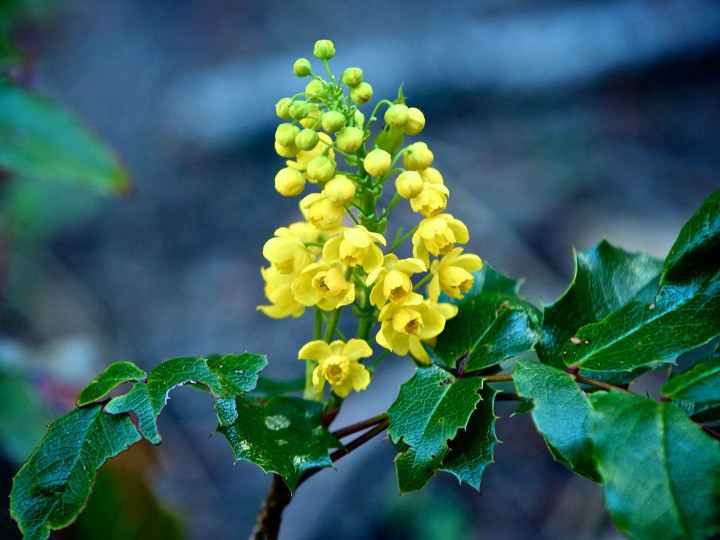
🌿 Oregon grape root (Mahonia aquifolium syn. Berberis aquifolium)

A bitter, berberine‑rich root/rhizome from a holly‑leafed evergreen shrub native to the Pacific Northwest—best known in modern clinical research for topical use in inflammatory skin conditions (especially psoriasis), with much of its broader “systemic” interest often extrapolated from berberine research rather than Oregon grape root preparations themselves.

Sources:
RxList – overview, traditional uses, and summary of evidence for psoriasis
Oregon State University Landscape Plants – plant description, habit, and native range notes
Kew Plants of the World Online – accepted name, synonymy, and native distribution

đŸŒ± Botanical snapshot

  • Family: Berberidaceae
  • Accepted name: Berberis aquifolium Pursh
  • Commonly used horticultural/medicinal name: Mahonia aquifolium
  • Plant type: Evergreen shrub / subshrub
  • Typical height: About 3–6 ft (can be taller in ideal conditions)
  • Leaves: Pinnately compound with spiny, holly‑like leaflets; glossy, often bronzing/purpling in cold seasons
  • Flowers: Bright yellow clusters (racemes) in spring
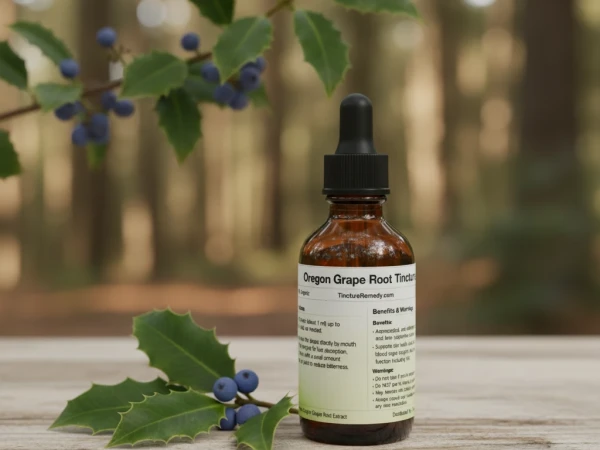
  • Fruit: Blue‑black, glaucous berries (tart; used in jellies/wildlife food)
  • Native range: Western North America—SW Canada through the Pacific Northwest into N California (with introductions elsewhere)

Sources:
Kew Plants of the World Online – accepted name and native range
Missouri Botanical Garden Plant Finder – morphology, flowers/fruit, habitat notes
Oregon State University Landscape Plants – growth habit, leaves, flowers, fruit

đŸ§Ș Key phytochemicals

Oregon grape root is chemically defined largely by isoquinoline alkaloids, a class strongly associated with antimicrobial and anti‑inflammatory - bioactivity in multiple Berberidaceae plants.

  • Major alkaloid class: Isoquinoline alkaloids (protoberberines and related types)
  • Commonly reported constituents (especially in Mahonia/Berberis extracts):
  • Berberine
  • Palmatine
  • Jatrorrhizine
  • Berbamine
  • Magnoflorine

Sources:
MDPI Toxins – HPLC identification/quantification of isoquinoline alkaloids in Mahonia aquifolia extracts, including berberine-class compounds
RxList – notes on antimicrobial relevance and the role of plant chemicals in Oregon grape

💚 Evidence‑supported benefits

1) Psoriasis symptom improvement with topical preparations
Clinical trials and reviews suggest topical Mahonia aquifolium extract can reduce psoriasis severity in some people, with generally good tolerability in studied products—though study quality varies across the literature.

  • What the evidence supports best: Topical use for mild‑to‑moderate plaque psoriasis (improvements in severity indices and/or patient‑reported outcomes in multiple trials)
  • What to keep in mind: Products, concentrations, and extract standardization differ—so results don’t automatically generalize to every cream or oral supplement.

Sources:
American Journal of Therapeutics 2006 – double‑blind, placebo‑controlled trial of topical Mahonia aquifolium extract in mild‑to‑moderate psoriasis
Journal of Clinical and Aesthetic Dermatology 2018 – review of clinical trials of topical Mahonia aquifolium for psoriasis and atopic dermatitis
RxList – “possibly effective” summary for psoriasis with topical extract products

2) Atopic dermatitis eczema early but limited clinical support
Evidence is much thinner than for psoriasis, but at least one clinical trial in the dermatology literature suggests potential benefit for atopic dermatitis with topical Mahonia—not enough to treat as “settled,” but enough to justify cautious interest.

Source:
Journal of Clinical and Aesthetic Dermatology 2018 – review noting one atopic dermatitis trial among included studies

3) Antimicrobial and anti‑inflammatory activity is plausible but mostly not “clinically proven” for oral Oregon grape root
The chemistry (berberine‑class alkaloids) supports mechanistic plausibility for antimicrobial/anti‑inflammatory effects, but for many common claims (digestion, “cleansing,” systemic infections), the strongest human evidence often comes from berberine studies rather than Oregon grape root preparations specifically.

Source:
RxList – discussion of proposed antimicrobial effects and the gap between traditional uses and evidence

Benefits

  • Psoriasis symptom improvement with topical preparations
  • Atopic dermatitis eczema early but limited clinical support
  • Antimicrobial and anti‑inflammatory activity is plausible but mostly not “clinically proven” for oral Oregon grape root