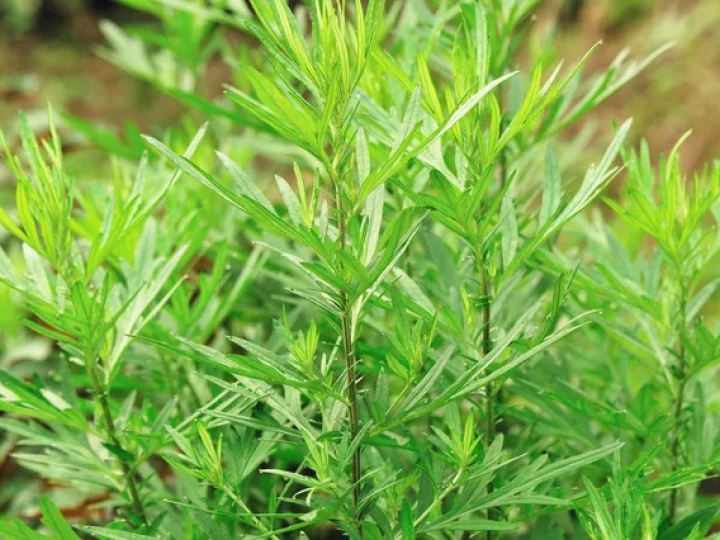
Mugwort

Artemisia vulgaris

Mugwort

🌿 Mugwort (Artemisia vulgaris)

A warming, aromatic, bitter‑tonic herb traditionally used for digestion, circulation, menstrual support, and calming the nervous system — with a complex chemistry that requires respect and proper use.

đŸŒ± Botanical Snapshot

Mugwort is a perennial Asteraceae herb with dark green upper leaves, silvery undersides, and a strong resinous aroma. It grows widely across Europe, Asia, and North America, especially along roadsides and disturbed soils.

  • Family: Asteraceae
  • Genus: Artemisia
  • Species: Artemisia vulgaris
  • Common names: Mugwort, Common Mugwort
  • Type: Perennial herb
  • Height: Typically 1–2 m (3–6 ft)
  • Leaves: Deeply divided, dark green on top, silvery‑white and downy beneath; aromatic when crushed
  • Stems: Reddish to purplish, angular, often slightly woody at the base
  • Flowers: Small, greenish to reddish‑brown, arranged in panicles of drooping flower heads
  • Habitat: Roadsides, fields, disturbed soils, waste places
  • Native range: Europe, Asia, North Africa; naturalized widely in North America

đŸ§Ș Key Phytochemicals

Mugwort contains a chemically diverse profile that varies by region and harvest stage, but consistently includes:

  • Volatile Oils
  • Cineole
  • Camphor
  • Borneol
  • Thujone‑bearing fractions (dose‑dependent caution)
  • These contribute to its warming, aromatic, antispasmodic, and antimicrobial actions.
  • Flavonoids
  • Quercetin
  • Luteolin
  • Apigenin derivatives
  • Provide antioxidant and anti‑inflammatory effects.
  • Sesquiterpene Lactones
  • Bitter digestive stimulants
  • Support bile flow and liver function
  • Coumarins & Triterpenes
  • Support circulation
  • Reduce tension and spasms

Reference:
Mugwort health benefits and uses

💚 Evidence‑Supported Benefits

1. Digestive Support (Most Consistent Evidence)
Mugwort is a classic bitter‑aromatic digestive herb used for:

  • Bloating
  • Gas
  • Sluggish digestion
  • Poor appetite
  • Its bitterness + volatile oils stimulate digestive secretions and bile flow.

Reference:
theherbalmedic.co.uk

2. Menstrual & Reproductive Support (Traditional + Plausible)
Mugwort is traditionally used as an emmenagogue, meaning it supports:

  • Delayed or scant menstruation
  • Menstrual cramping
  • Pelvic stagnation
  • This is one of its strongest historical uses — and the reason it is contraindicated in pregnancy.

Reference:
theherbalmedic.co.uk

3. Antispasmodic & Circulatory Support
Volatile oils and coumarins help relax smooth muscle and improve circulation, making mugwort useful for:

  • Digestive cramping
  • Menstrual tension
  • Cold‑stagnation patterns

4. Anti‑Inflammatory & Antimicrobial Activity
Preclinical studies show mugwort extracts exhibit:

  • Anti‑inflammatory effects
  • Antimicrobial activity
  • Antiparasitic potential

Reference:
sacredtreatments.com
These findings support some traditional uses but do not replace clinical care.

5. Nervine & Sleep Support (Traditional)
Mugwort has mild calming properties and is used for:

  • Anxiety
  • Stress
  • Restlessness
  • Sleep support

It is also culturally famous for vivid or lucid dreaming, though this is folklore rather than clinical evidence.

6. Liver & Metabolic Support (Traditional)
Sesquiterpene lactones and triterpenes support:

  • Bile flow
  • Liver sluggishness
  • Fat digestion

Reference:
The Herbal Medic

Benefits

  • Digestive Support (Most Consistent Evidence)
  • Menstrual & Reproductive Support (Traditional + Plausible)
  • Antispasmodic & Circulatory Support
  • Anti‑Inflammatory & Antimicrobial Activity
  • Nervine & Sleep Support (Traditional)
  • Liver & Metabolic Support (Traditional)