Echinacea
🌿 Echinacea (Flower • Leaf • Root)
A multi‑part, immune‑modulating, antioxidant‑rich herb traditionally used for respiratory support, inflammation, and whole‑body resilience.
Using all three parts — flowers, leaves, and roots — gives your tincture a full‑spectrum profile, because each part contains different concentrations of alkylamides, caffeic‑acid derivatives, and polysaccharides.
🌱 Botanical Snapshot
- Family: Asteraceae
- Species commonly used: Echinacea purpurea, E. angustifolia, E. pallida
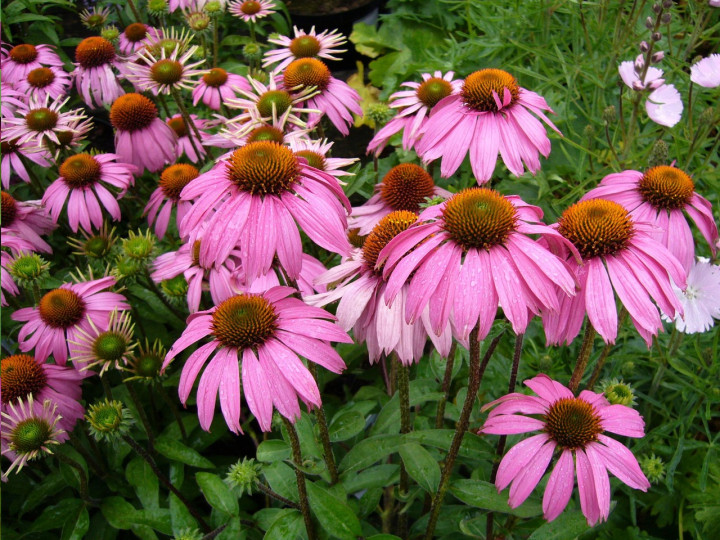
- Plant type: Perennial
- Parts used in your tincture:
- Flowers: highest in cichoric acid + antioxidant compounds
- Leaves: broad immune‑modulating polysaccharides
- Roots: richest in alkylamides (tingly, numbing effect)
References:
Echinacea is a perennial daisy‑family herb native to North America
Flowers and roots contain higher antioxidant concentrations than leaves
🧪 Key Phytochemicals (By Plant Part)
🌸 Flowers
- Cichoric acid
- Rosmarinic acid
- Flavonoids
- Polyphenols
🍃 Leaves
- Polysaccharides (immune‑modulating)
- Caffeic‑acid derivatives
- Minor alkylamides
🌱 Roots
- Alkylamides (strongest in roots — responsible for the “tingle”)
- Polyacetylenes
- Phenolic acids
References:
Echinacea contains caffeic acid derivatives, alkylamides, phenolic acids, rosmarinic acid, and polyacetylenes
Alkylamides are especially concentrated in E. purpurea roots and stimulate immune activity
💚 Evidence‑Supported Benefits
1. Immune System Activation
Echinacea can activate:
- Macrophages
- Neutrophils
- Natural killer (NK) cells
- This may help the body respond more efficiently to viral or bacterial challenges.
References:
Echinacea may stimulate immune cells including macrophages, neutrophils, and NK cells
May slightly reduce the chance of catching a cold (NCCIH)
2. Antioxidant Protection
Flowers and roots contain high levels of:
- Cichoric acid
- Flavonoids
- Rosmarinic acid
- These compounds help buffer oxidative stress and support tissue resilience.
Reference:
Echinacea is rich in antioxidants including flavonoids, cichoric acid, and rosmarinic acid
3. Anti‑Inflammatory Activity
Alkylamides and phenolic acids help modulate inflammatory pathways, which may support:
- Sore throats
- Respiratory irritation
- General inflammatory discomfort
References:
Echinacea contains anti‑inflammatory compounds that may reduce inflammation caused by bacteria
Studies show echinacea can reduce inflammatory markers (IL‑6, IL‑8, TNF)
4. Respiratory Support
Traditionally used for:
- Early‑stage colds
- Upper respiratory irritation
- Throat discomfort
- Modern research shows mixed results, but some studies suggest reduced cold incidence.
Reference:
Echinacea may slightly reduce chances of catching a cold; evidence mixed for duration reduction
5. Skin & Topical Benefits
Extracts may support:
- Hydration
- Barrier repair
- Redness reduction
Reference:
Echinacea extract improved skin hydration and reduced wrinkles in small studies
6. Mood & Stress Support (Emerging Research)
Some small trials show potential benefits for:
- Mild anxiety
- Emotional balance
Reference:
Echinacea extract showed improvements in anxiety and emotional well‑being in small human trials
Benefits
- Immune System Activation
- Antioxidant Protection
- Anti‑Inflammatory Activity
- Respiratory Support
- Skin & Topical Benefits
- Mood & Stress Support (Emerging Research)